Interview with Iván Szelényi--January 21, 2017

Interview with Iván Szelényi, William Graham Sumner Emeritus Professor of Sociology at Yale University and Foundation Dean of Social Sciences at NYU Abu Dhabi. He has also taught at UCLA, the CUNY Graduate Center, and the University of Wisconsin, Madison. The interview was conducted in two parts in Budapest, Hungary, on January 21, 2017. To access the audio of the complete interview (in two parts), click here for Part 1 and here for Part 2

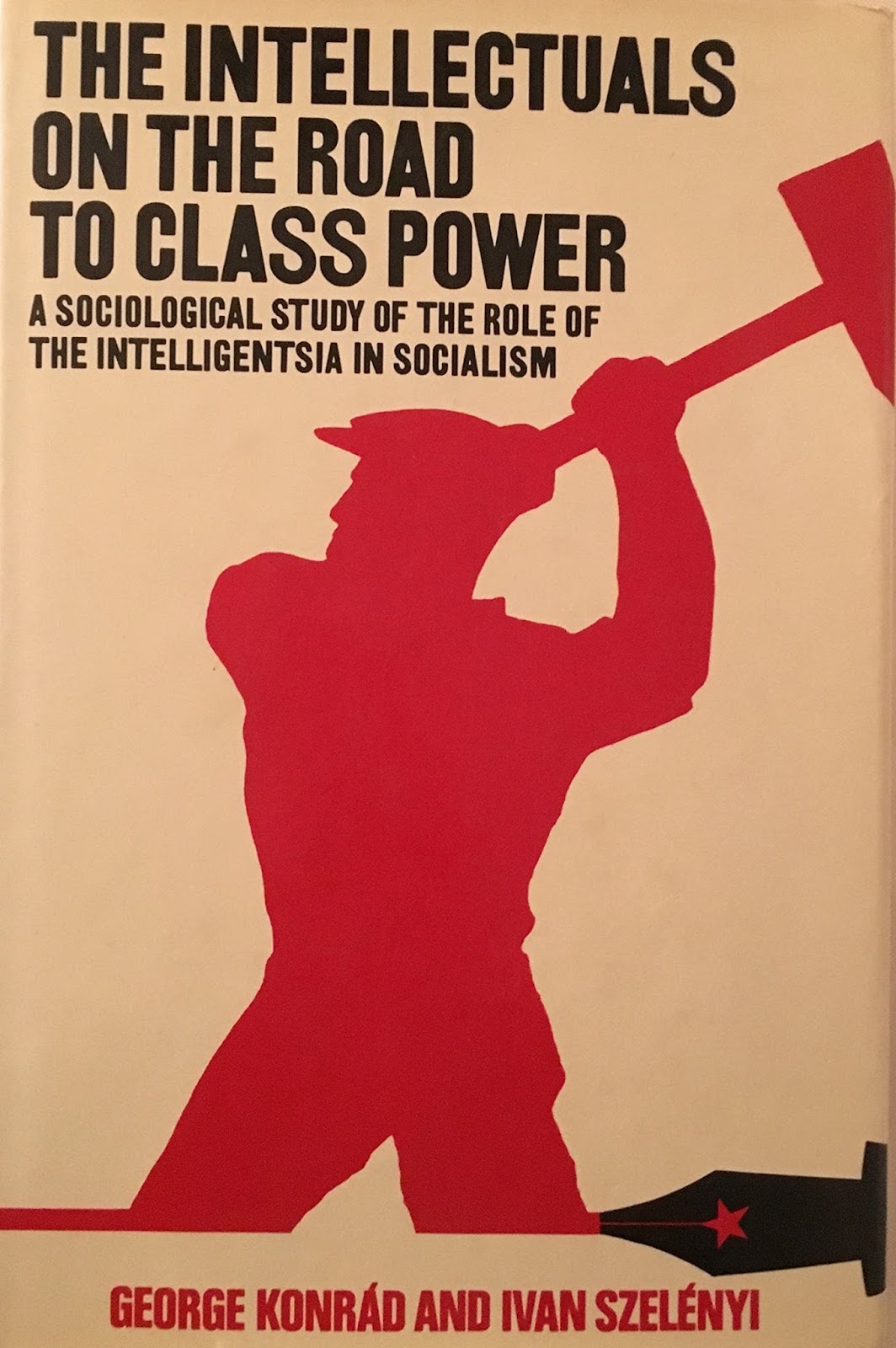
Szelényi is the author of many books and the recipient of as many prizes and distinctions. Among his most prominent publications is The Intellectuals on the Road to Class Power, which he co-authored with György Konrád (and which first appeared in 1979); Making Capitalism without Capitalists (With Gil Eyal and Eleanor Townsley), published by Verso in 1998 and translated into several languages; Privatizing the land: Rural Political Economy in Post-Communist Societies, also from 1998; Theories of the New Class – Intellectuals and Power (with Larry King) from 2004, and Poverty and Social Structure in Transitional Societies: The First Decade of Post-Communism (from 2013). 

Special thanks to Máté Rigó (Ph.D. Cornell, 2016) for preparing an inventory of the interview.

Interview Themes


00:00 Family background: bourgeois family from Késmark
02:00 Family politics: Horthy, Trianon as a source of political radicalism, Nyilas party
Szelényi's paternal great-great grandparents Karl József
Kamitska (1804-1864) and Anna Schwarz (1813-1900)
07:00 Political conviction of Szelényi’s father, radicalization
09:00 Trianon, exposure to nationalist discourses
11:00 1948: Six-month trip to the Netherlands as a ten-year old through the Calvinist church
12:00 Dutch trip and stay in a Dutch family’s home; trip formative for the formation of Szelényi’s political views
14:00 Dutch host family; Hungarian fixation on noble background vs. Dutch attitudes
17:00 Identification as a “transnational,” American, and Hungarian
Szelényi’s grandfather, Ödön (Victor) Szelényi (1877-1931),
distinguished scholar of education, philosophy,
literature and theology
19:00 The siege of Budapest, experiences with the Red Army, Rózsadomb, Kapy utca in 1944
23:00 The siege, interaction with soldiers
24:00 Impact of literature teacher in formation of left and liberal, humanitarian ideas
26:00 Influential books, classmates, friends, Ferenc Litván, György Litván, József Litván, Károly Szendi
30:00 Diversity of friends’ backgrounds
31:00 1950s: left-liberal views solidified, non-communist, ”lefty”
34:30 Endorsement of Bernie Sanders
36:00 Humanism as political conviction; Political views did not change
Szelényi's father, Gusztáv
Szelényi (1904-1982)
40:00 Experience of reading many novels during adolescence, Thomas Mann, Dostoevsky, Ibsen, Hungarian poetry
47:00 The artist Lili Országh
50:00 Training as an urban sociologist, András Hegedűs
52:00 Ford fellowship at Columbia University and Berkeley, 1964-1965
54:00 George Konrád
56:00 Empirical research on newly built housing estates with Konrád
58:00 Overrepresentation of cadres in new socialist block apartments


00:00 Sociology
02:00 Choice of sociology as a career, University of Economics, János Avar, studies as an undergraduate
03:00 Refused to join Communist Youth League initially
04:00 Central Statistical Office
06:00 Choice of sociology as a profession
08:00 Research on leisure time
11:00 Ford Foundation interview
13:00 Research on housing with Konrád
14:00 1956 revolution, followed events without engagement
16:00 Politics without passions
19:00 2016 US elections
21:00 1956, Went on a date instead of participating in revolutionary march
24:00 Fear of the rise of anti-Semitism and the return of the Horthy regime
28:00 1956 revolution a mixed bag ideologically, thinks of emigrating to Vienna
31:00 Russian invasion of Hungary in 1956
34:00 The terrorist mindset, Islamist terrorists, suicide bombers
35:00 Emigration to Vienna
36:00 Intellectuals on the Road to Class Power, István Bibó as a colleague at Statistical Office
37:00 Foreign journals department at the Statistical Office
38:00 Idea for Intellectuals on the Road to Class Power comes from István Bibó
40:00 György Konrad, The City Builder; the privileges of intellectuals in the socialist regime
43:00 The transformation of villages under socialism; “under-urbanization,” one million commuters in 1970s Hungary
46:00 The transformation of gender relations in rural Hungary
48:00 Urban planners and under-investment in villages; Szelényi and Kondrád’s article “dictatorship of the club of planners,” Pál Granasztói
53:00 Evaluations of socialism by intellectuals in Hungary in 1960s, 1970s
54:00 István Bibó, dictatorship of the intellectuals,” Milovan Djilas, changes after Stalin’s death; science as tool to give legitimacy to state bureaucrats
58:00 Ideology and intellectuals
1:01:00 Intellectuals vs. technicians, technocrats
1:05:00 US academia and technocracy
1:08:00 Thorstein Veblen, US, “dictatorship of engineers,” New York intellectuals, managers
From the left: Sociologists Teréz Kovács and Iván Szelényi,
political scientist Bálint Magyar, and agrarian social
scientist Pál Juhász (photo Fortepan).
1:13:00 Criticism of intellectuals in the US; capitalist economy bribes intellectuals to prevent subversion
1:15:00 Moralism and the humanities
1:18:00 Katherine Verdery
1:21:00 The reception of Intellectuals on the Road to Class Power in the US; the writing of the book
1:23:00 Withdrawal of research funds from Konrád and Szelényi
1:28:00 Punishment after Intellectuals on the Road to Class Power appeared

Interview with Adrian Grama--December 28, 2016

Interview with Adrian Grama, advanced Ph.D. student in History at the Central European University in Budapest. Interview conducted in Vienna, Austria on December 28, 2016. To listen to an audio stream of the interview, click here


Grama has recently completed his dissertation titled  “Labouring Along: Industrial Workers and the Making of Postwar Romania, 1944-1958.” He is also associate editor for the European Review of History.

Interview Themes

00:00 Introduction
00:47 How Grama defines his field: the social history of the Romanian economy
02:41 Evolution of Grama’s dissertation topic
05:07 On making the switch from Political Science to History
08:53 On cutting the “labor question” out of the title
11:01 Most revelatory moments during the writing of the dissertation (on the importance of the Second World War and the postwar economic transition, austerity as an experience Romania shared with many other countries)
16:08 On how a history cannot be limited to one country
17:00 Implications of comparing Romania to France and/or Germany
18:58 Why the idea of a “post-war” as a clear historical conjuncture is absent from the historiography East-Central Europe (importance of engaging in periodization)
21:31 What happens to ideology when one compares East and West?
23:56 To what extent did the conditions of the global market allow for genuinely different policy options after the Second World War?
27:10 Ethnographic/social anthropological approach versus classical social history
32:03 On the applications of the word “populism”
35:15 Grama’s working-class family history and how it influenced his perspective
38:35 Family interpretations of the socialist experience that Grama grew up with
45:04 Grama on the efforts of young Romanian intellectuals to write a history relevant for the present
47:45 On the aspects of the past that seem most relevant for understanding the present (“history is not a morality tale”)
53:37 On the intellectual environment at CEU
55:44 Romanian politics and how it is different from that of Hungary and Poland (explaining the absence of a far right in Romania)
1:04:05 On Romanian intellectuals’ disdain for the common people
1:05:49 Is there a political valence to nationalism studies?
1:09:18 On whether we can move on from the study of nationalism or not
1:11:00 Memorable political moments/events in Grama’s own life
1:15:05 Manifestations of hope and disappointment Grama has witnessed
1:18:03 Books and scholars that have had a strong influence on Grama (Stephen Kotkin’s Magnetic Mountain)
1:23:20 On training people to write history
1:26:50 What Grama is reading now and his next project

In Memoriam--Andrew Romay (1922-2017)

A tribute to Andrew Romay (1922-2017)


On Friday, February 10, 2017, Mr. Andrew Romay, who was my dear friend, died in New York. His colorful and valuable life deserves, in my opinion, a special obituary. Few people in the world knew both Nazi concentration camps and Communist prisons, and few are those who, once they arrived in the United States, became both close friends and colleagues of the world famous brothers, Paul and George Soros. A highly successful financier, Andrew Romay was also an important philanthropist who, among other things, helped many immigrants to adjust to life in the United States.

Andrew Romay was born in Miskolc, Hungary, on September 24, 1922, to a Jewish family.  He never renounced his faith despite pressure in Hungary on assimilated Jews to convert to Christianity.  Characteristically for the inconsistencies of Hungarian and, in general, East European life in the interwar period, Andrew attended and graduated in a Catholic high School and, despite growing public antisemitism and anti-Jewish laws, he was allowed to study economics at Budapest University. Yet, before completing his doctoral work, he was drafted into labor service which, under the fascist Arrow Cross regime, late in 1944, found him digging anti-tank trenches on the Austro-Hungarian border. Barely alive, he was liberated, in the Mauthausen concentration camp, Austria, in May 1945, by US Army troops. 

Following the revolution of 1956, he and his fiancée Marietta Puder fled to Austria where the two were married and soon after emigrated to the United States. Although penniless, the couple immediately found work; he as an economist, and she as a fashion designer. Andrew soon met the engineer Paul Soros, George Soros’s elder brother, with whom he formed a Coal Transportation business in the South. This and later business ventures enabled Paul Soros and Andrew to make their fortunes.


In the last decade or two of his life, Andrew, who had lost his wife, devoted himself more and more to charity work. He did this in part by financing the creation of memorials for the thousands of Jews and Roma forced laborers who were killed or died of typhus and starvation at the Austro-Hungarian border in 1944-1945. He also helped to finance Holocaust studies in Hungary. His latest and greatest philanthropic achievement was the creation of a center for recent refugees, immigrants, and asylum-seekers at the English-Speaking Union in New York City. This so far has helped some 750 newcomers to the US with year-long scholarships, English classes, workshops, civic programs, and cultural events. 


Returning to Hungary, he completed his doctoral studies and subsequently worked at a state-owned import-export company where he met his future wife. Unable to stomach the abuses and gross inadequacies of Hungary’s Stalinist system, he tried to illegally cross the infamous Iron Curtain but was caught and imprisoned in a concentration camp at Kistarcsa. Freed six months later, he was hired by the Ministry of Foreign Trade which, even though he was one of the handful who spoke English as well as other languages and had a doctoral degree, gave him only entry level work.

Andrew Romay was one of thousands of highly talented Hungarians who were driven from their own state and society and yet, who nevertheless never abandoned their home country.

Interview with Isabel Hull--August 5, 2016

Interview with Isabel Hull, John Stambaugh Professor of History at Cornell University. The interview was conducted in Ithaca, NY, on August 5, 2016. To access an mp3 of the complete interview, click here.

Hull is the author of four books which received numerous prizes between them, most notably Sexuality, State and Civil Society in Germany, 1700-1815 (Cornell University Press, 1996.), Absolute Destruction: Military Culture and the Practices of War in Imperial Germany (Cornell, 2004), and most recently A Scrap of Paper: Breaking and Making International Law in the First World War (Cornell, 2014). In addition to being a Member of the American Academy of Arts and Sciences, she has also been a John Simon Guggenheim Fellow and an Alexander von Humboldt-Stiftung Research Fellow, and recently she won the very prestigious Max-Weber-Stiftung/Historisches Kolleg Research Prize.


Special thanks to Máté Rigó, Ph.D. (Cornell, 2016), for his help with the interview. 

Interview Themes

00:00 Introduction
01:00 Interest in Germany and German history, high school, early interest in Nazism
03:45 Choosing history as a profession
05:40 The Guns of August, early interest in WWI
08:00 Peculiarities of German history, themes that characterize Hull’s career
09:30 repetition in German history
11:45 Structures and their cultural aspects, habits, action, mind
12:15 A Scrap of Paper
13:00 1870 as a crucial in German history
14:20 1848
15:00 Sonderweg and its criticism
18:30 Max Weber
19:20 Germany’s special political path, WWI, WWII; Germany’s problems as political problems
21:00 Politics as key for understanding history
21:20 Trump
22:40 The role of chance in history
25:00 Kultur vs. politics in German political thought and practice
29:00 Critical interpretations of 19th- and 20th-century German history; Sexuality, State, and Civil Society in Germany
31:00 Interest in early modern history, baroque culture; David Sabean
32:00 Hannah Arendt
33:00 Intellectual influences: Gerhard L. Weinberg, Hans W. Gatzke, Peter Gay, Henry Turner, George Mosse, Joseph Redlich
36:00 Reaction to Christopher Clark’s Sleepwalkers
38:00 Diplomacy and the disappearance of Poland; Belgium
43:00 Interpretations of WWI; A Scrap of Paper
46:00 Current historiography and its problems; relativism; new interpretations of old stories as inadequate
50:00 Hull’s new project on WWI
54:00 Moral judgement and history
58:00 Social historical approach
1:02:00 WWI, diplomacy and its critics; Lenin
1:04:00 Belgium and WWI counterfactuals
1:09:00 International law and the protection of small states
1:10:00 States and international law
1:15:00 Council of Historians as advisory board to political elites; Graham Allison and Niall Ferguson’s article in The Atlantic
1:17:00 1839 Belgian treaties and origins of WWI
1:21:00 Emotions of Germans in early 1900s; the revolutionizing of Europe by Germany
1:29:00 István Bibó; Thomas Mann
1:31:00 Vergangenheitsbewältigung
1:35:00 Experience of the Bundesrepublik in the 1970s; RAF; The Green movement, the women’s movement
1:40:00 Current world politics; Russia; tu quoque argument
1:42:00 Russian historical development v US
1:46:00 Vladimir Putin, KGB
1:48:00 Angela Merkel

For a short piece on Hull and the use of "tu quoque," see Wide Awake with Isabel Hull

Interview with Jim Bjork--June 13, 2016

Interview with Jim Bjork, Senior Lecturer in Modern European History and Liberal Arts at King's College London. The interview was conducted in London on June 13, 2016. To access an mp3 of the complete interview, click here.

Jim Bjork specializes in the history of nationalism and the social history of religion. His book, Neither German nor Pole: Catholicism and National Indifference in a Central European Borderland, 1890-1922 (University of Michigan, 2008), shows the myriad ways religion competed with nationalism for the "souls" of Upper Silesians around the turn of the century. He’s currently at work on a history of religion in postwar Poland. 

Interview Themes

How Bjork came to the study of East-Central Europe; coming of age around 1989 (min. 1:25)
What drew him initially to “Cold War” takes on the communist bloc (4:15)
Bjork’s memories of 1989 as a student at Georgetown - "disorienting but exhilarating" (5:55)
On his first visit to the region in 1993 and what stood out; the unique atmosphere in Romania (9:20)
Learning German, Polish, etc. (14:50)
Bjork's plans when he started grad school at the University of Chicago (16:15)
On Bjork’s starting cohort at Chicago (17:55)
Is there anything that sets his cohort/generation apart intellectually? John Boyer's influential interest in religion and politics; Alf Lüdtke and Alltagsgeschichte (19:35)
Comparing Chicago to Columbia in treatment of the Habsburg Monarchy (24:12)
How he came to his dissertation/book topic (28:20)
On religion as an “independent variable” (31:07)
How his interests were influenced (or not) by secessionism of the moment—Yugoslavia, USSR, Czechoslovakia? (34:25)
Bjork’s view on plebiscites in the post-WWI period, up to Brexit (38:00)
Sovereignty and the problem Westphalia was meant to address (44:00)
Were the partitions of Poland in some sense the original geopolitical sin? (46:57)
How he came to his current book project on religion in postwar Poland (52:30)
On Polish historiographical dichotomies (peasants/szlachta, nativists/Westernizers, Piłsudski/Dmowski, church/nation) and ways of looking at Polish history (58:17)
On Vergangenheitsbewältigung and Jan Gross's Neighbors (1:05:55)
The recent changes in Poland (with the coming to power of PiS) and how (un)expected it was (1:17:46)
On whether there is a desire on the part of East-Central Europeans to stop time (1:23:10)
Where the field is going/should go from here (1:29:05)
What's different about studying East-Central Europe from Britain as opposed to the US (1:40:42)

A Country for Old Men

October 2014 protest in Budapest against the Orbán government.
Photograph: Ronan Shenhav
This was recently published in the Boston Review. 

Last September an article on the front page of a leading Hungarian daily began, "The story of the ever-deepening refugee crisis is taking ever more unexpected turns." A prominent Hungarian intellectual and former dissident, György Konrád, had come out in support of the efforts of the Hungarian government to build a wall to keep out newcomers and to cast them as economic opportunists rather than political refugees. In another corner of the Hungarian media, pundits were citing passages from The Final Tavern (A végső kocsma), a 2014 book by Holocaust survivor and 2002 Nobel laureate Imre Kertész, who passed away last month. In the book, Kertész was sharply critical of liberals' welcoming attitude toward Muslim refugees and migrants. His and Konrád's statements were registered with incredulity in the liberal press and with undisguised relish on the right.

Anyone who has followed the serpentine trajectory of Hungarian politics since the controlled collapse of state socialism in 1989 might be forgiven for throwing their hands up in confusion. For more than two and a half decades, Hungarian political life has been a story of reversals. The party of the Young Democrats (Fidesz), founded in 1988 by a few-dozen college students, has mutated from a member of the Liberal International to the torchbearer of right-wing populism in Eastern Europe. Hungarians who once described themselves as liberal, including the current prime minister and Fidesz leader Viktor Orbán, have shed the epithet. Already in 1994, Orbán favored replacing it with "free-thinking." Twenty years later, his metamorphosis was complete when he wondered whether being part of the European Union was an obstacle to the reorganization of the state into "an illiberal nation state within the EU."

Orbán's liberal critics are quick to insist that he was never one of them. Plucky anti-communist dissidents who trumpeted individual liberties against the paternalistic and overweening socialist party-state merely looked liberal to many Western liberals. But conservatives, too, found soul mates in dissidents, generalizing their anti-communism into a wholesale censure of the left. In short, everybody loved a dissident. It was the left-leaning poet W. H. Auden who helped to bring dissident poet and later Nobel Prize–winner Joseph Brodsky to the United States in 1972; another poet and powerful intellectual force of the U.S. neoconservative movement, Peter Viereck, brought him to Mount Holyoke College in 1974. For every dissident who fulfilled the Western liberal fantasy, there were as many who fulfilled at least part of the conservative one, from union leader and Solidarity figurehead Lech Wałęsa to the Czech playwright, philosopher, and president Václav Havel.
If it was not the dissidents themselves who changed, what explains these reversals? And why has the migrant and refugee crisis in particular become so symptomatic of a crisis of liberalism?

...[to continue reading, click here]

Interview with László Karsai--January 10, 2016

Interview with László Karsai, Professor of History at Szeged University in Hungary. The interview was conducted in Budapest, Hungary on January 10, 2016. To access an mp3 of the complete interview, click here.

László Karsai specializes in the history of the Holocaust and anti-Semitism in Hungary. He has also written on the nationality question in France and on the Gypsy Holocaust in Hungary. 

His publications include: A cigánykérdés Magyarországon 1919-1945. Út a cigány Holocausthoz [The Gypsy Question in Hungary 1919-1945. Toward the Gypsy Holocaust] (1992), as well as with many works, including a book on the nationalities question in Belgium (Flamandok és vallonok, 1986), and a biography of the Hungarian Arrow Cross leader, Ferenc Szálasi (Szálasi Ferenc - Politikai életrajz, 2016). He also compiled and edited two extensive volumes of primary sources: one of anti-Semitic writings and another of writings against anti-Semitism in Hungary. 

Special thanks to Máté Rigó, Cornell University Ph.D. student, for preparing an inventory of the interview. 

Interview Themes

0:41 Family origins, Elek Karsai (b. 1922), Holocaust, survival of father in Buda in 1944
2:00 Holocaust in family history
3:20 1983 – Starts research on Hungarian Gypsy Holocaust
5:00 Elek Karsai’s Holocaust stories, his work on Szálasi’s trial
7:00 Ph.D. dissertation on the nationality question and Marxism, criticizes Marx and Engels
8:00 1978-79: his paper published in Magyar Filozófiai Szemle, identifies as a right-wing dissident at Szeged University
10:00 Publications on the Holocaust
11:00 Elek Karsai’s political trajectory, 1940s, finished rabbinical seminary, then became social democrat, then communist; starts his career as sociology professor around Sándor Szalai; After Szalai’s conviction he works as an archivist at the National Archives
15:00 Father rejoins the communist party in the early 1960s.
16:00 Karsai’s articles in Beszélő in 1980s, in which he criticized Tamás Krausz and László Béládi
20:00 Parallels between the leftist and liberal generations of intellectuals that came of age in 1945 and 1989: missed opportunities and the experience of having “screwed up”
22:00 Elek Karsai's documentary book on 1944/1945 Sorsforduló, protest by Czechoslovak embassy, book triggered political scandal, Soviet communist party initiates censorship of L. Karsai's work
24:00 Elek Karsai nominated as director of Trade Union Archive
28:00 Sociology as a discipline in late 1940s, József Szigeti, István Király
34:00 Fear as a defining experience of his father
35:00  László Karsai’s mother and grandmother, Emma Lederer
40:00 Grandmother and politics, Mihály Babits, Antonio Widmar, László Hárs
44:00 Political convictions of the women in his family; Mother worked at the Hungarian Television, travel to Cannes
49:00 Reading complete works of Marx and Engels
51:00 1956 Revolution as taboo, disillusionment with communism in late 1950s
56:00 Elek Karsai’s radio show
58:00 Protest of Hungarian writers at the UN
1:00:00 Exposure to anti-Communist literature in Paris in early 1980s, 1956 literature
1:03:00 1956 Revolution, Tibor Méray – Tamás Aczél, Tisztító vihar
1:07:00 Expulsion from Szeged University
1:12:00 History and historiography of the Holocaust
1:16:00 Historian as public intellectual in Hungary
1:17:00 Mistakes of the generation of 1989, Viktor Orbán, similar to Franz Joseph and János Kádár as “father figure” for Hungarians, corruption
1:22:00 The crisis of liberal democracy
1:28:00 Hungarian Jews and the migrant crisis, György Konrád, Hungarian Jews and politics after 1989
1:33:00 Migrant crisis, Muslim minorities from North Africa and the Middle East

Hope and Scandal in Hungary

This article was recently published in Dissent, along with original photos by Róbert Pölcz [click on photo to enlarge].

Bust of István Bibó (1911-1979) on the Danube promenade in Budapest. Just above the inscription is graffiti directed against the current prime minister of Hungary, Viktor Orbán [click photo to enlarge]. Photo by Róbert Pölcz.
This year a new Hungarian film, White God, has been touring the festival circuit. It’s about an abandoned mongrel whose trusting nature is repeatedly tested by abuse and cruelty. The result: what had once been an endearingly naughty pooch turns into a very bad dog.

White God could be an allegory about Hungary—a proud creature, kicked around and abused, diminished and blamed, that eventually lashes out in fury. Or maybe it’s about how Hungary has treated some of its own since the second half of the nineteenth century—assimilating them, but forever suspecting them of betrayal; marginalizing them, persecuting them outright, or even killing them. And so, as in the film, the odd victim leaps up to tear out the jugular of a Hungarian guard in a single snap.

This tortured sense of intractable antagonism was the lifelong preoccupation of the Hungarian thinker and former statesman, István Bibó. Born in Budapest in 1911, Bibó spent most of his life trying to divert the states and peoples of Central and Eastern Europe—and, above all, his native country—away from the extremes of enraged self-pity and self-righteousness and toward responsibility. At the same time he sought to sensitize the Great Powers to the miseries that fed these extremes. As he wrote in 1946, “Men are most wicked when they believe they are threatened, morally justified, and exonerated, and particularly when they feel they are entitled and obliged to punish others.”

... [to continue reading, click here]

© 2015 Holly Case, as first published in Dissent.

Interview with Marci Shore--April 10, 2015

Interview with Marci Shore, Associate Professor of History at Yale University. The interview was conducted in Ithaca, NY on April 10, 2015. To access an mp3 of the complete interview, click here.
  
Marci Shore specializes in European—and especially East-Central European—cultural and intellectual history is the author of 2 books, including Caviar and Ashes: A Warsaw Generation’sLife and Death in Marxism, 1918-1968 (Yale, 2006) and The Taste ofAshes: The Afterlife of Totalitarianism in Eastern Europe (2013). She has also translated Michał Głowiński’s Holocaust memoir, The Black Seasons, from the Polish (that book was published in 2005). In addition, she has  written a number of articles for both academic and more general readership audiences, including Kritika, Contemporary European History, and Modern European Intellectual History. She is currently at work on two book manuscripts, one is entitled “Phenomenological Encounters: Scenes from Central Europe,” and the other is an intellectual history of the recent revolution in Ukraine.

Interview Themes

How Shore came to be interested in history, people who influenced her, and the “susceptibility to being transported” (1:48)
How Shore came to be aware that she was living history in Eastern Europe in the 1990s and the “un-grounded” and “up-in-the-air” feel of that time (8:08)
What did people like Shore, who came of age intellectually in the 1990s, see or miss when compared with those who came before or those who came after? (11:58)
How Shore approaches writing: principles and idols (on “keeping the language fresh” and “setting the scene” as opposed to “telling the reader what to think”) (16:58)
On empathizing with the subjects of one’s work (25:20)
On what holds Shore’s body of work together: dynamics of generation, friendship (32:40)
Going to Eastern Europe to seek meaning: how does one arrive at the fundamental questions? (39:15)
Is there an identifiable “Naimark school” of those who studied under Norman Naimark (45:35)
What is at stake in considering oneself of an intellectual historian who focuses on a particular region? (51:05)
Is Eastern Europe becoming “real” again through events in Ukraine and on the Maidan? On the “return of metaphysics” and knowing that—for better or worse—“anything is possible.” (57:25) 
Shore on the “miraculous transformation of subjectivity” in Ukraine (1:05:28)
How should we be training the next generation of scholars in the field? (1:09:00)