Interview with Tara Zahra--April 30, 2017

Interview with Tara Zahra, Professor of East European History at the University of Chicago, where she is also Affiliated Faculty at the Center for Gender and Sexuality Studies and at the the Pozen Family Center for Human Rights. The interview was conducted in Vienna, Austria on April 30, 2017. To access the audio of the complete interview, click here. 

Zahra received her PhD in History in 2005 from the University of Michigan and has since published three books and won a number of prestigious prizes and awards. Her books include: Kidnapped Souls: National Indifference and the Battle for Children in the Bohemian Lands, 1900–1948 (Cornell, 2008), which won five prizes; The Lost Children: Reconstructing Europe's Families after World War II (Harvard, 2011), which won two prizes; and The Great Departure: Mass Migration from Eastern Europe and the Making of the Free World (Norton, 2016). In 2014, Zahra was also named a MacArthur Fellow. 

Special thanks to Máté Rigó for preparing an inventory of the interview.

Interview Themes

1:00 Early interest in the history of East-Central Europe
2:00 Swarthmore College, Pieter Judson’s “Fascism” seminar
4:00 Interest in the history of everyday life, social class, ordinary people
7:00 Literary interest in migration stories
8:00 First impressions of Central Europe, Vienna, 1998
10:00 Czechoslovakia, France, nationalism
11:20 Pieter Judson as a mentor
14:30 Post-1989 generation of historians of East-Central Europe in the US
17:00 De-humanization of Eastern Europe, national indifference, schools of thought on nationalism
19:00 Nationalism and the welfare state; Two approaches to nationalism in scholarship on East-Central Europe
20:30 “Debaters,” cultures of debate
23:00 Influences on her scholarship, Laura Downs
26:30 Vienna, Prague, European and comparative history
28:00 Trends in current historiography
30:00 The field of East European studies since 1989
32:00 Research on European history within history departments
35:00 British vs. East-Central European history
39:00 The study of the Habsburg Monarchy as a window to modern history; Schorske, psychoanalysis
42:00 Themes in Zahra’s scholarship; indifference; state management of populations
44:00 Recent project on de-globalization
46:30 Views on the Habsburg Empire; Pieter Judson; The Monarchy as a functional modern European state
49:00 Habsburg exceptionalism?
52:00 Challenges of studying East-Central European history
58:00 The Great Departure and current politics
1:04:00 The reception of The Great Departure
1:08:00 Digital humanities, history of capitalism, environmental history
1:10:00 Differences among questions asked by British, French, and East European historians
1:14:00 The training of graduate students
1:16:00 The choice of dissertation topics; danger of following trends
1:18:00 The recruitment of graduate students at the University of Chicago
1:20:00 Areas yet to be explored by modern European historians

Interview with Leyla Safta-Zecheria--March 14, 2017

Interview with Leyla Safta-Zecheria, PhD student in the Doctoral School of Political Science, Public Policy and International Relations at the Central European University in Budapest. The interview was conducted in Vienna, Austria, on March 14, 2017. To access the audio of the complete interview, click here. 

Safta-Zecheria has an MA in European Ethnology from the Humboldt University in Berlin and has also studied in Bremen, University of Toronto, and at Istanbul Bilgi University. She is currently writing her doctoral dissertation at CEU, which is tentatively titled  “Away towards the Asylum: The Politics of Biopolitics in Psychiatric Deinstitutionalization in Romania.”

Interview themes

00:00  Introduction
00:55  Given her training in various disciplines, how Safta-Zecheria defines her field of scholarly interest
02:40  What brought Safta-Zecheria to the study of psychiatric hospitals and orphanages 
06:20  Personal experiences that influenced her interest in the subject
08:00  On how Safta-Zecheria's perspective on the topic has changed over time
13:40  On the critique of human rights claims and interventions and, if not human rights, then what?
18:15  Parallels between dissent under state socialism and the nature of human rights claims (does the subaltern ever get to speak?) 
26:00  The paradox of therapeutic interventions and power: can there be therapy/amelioration without repression?
32:40  On how Safta-Zecheria learned about anti-psychiatry 
37:25  On patient "self-determination" and its challenges
41:30  Safta-Zecheria's take on theory (specifically Foucault's biopolitics) and its application
45:15  Are there viable alternatives to biopolitical approaches to this topic? 
51:40  Whether a patient can both be considered to have agency as well as to be embedded in a repressive power structure
58:40  Academic institutions where Safta-Zecheria has studied (Humboldt, Bilgi, Bremen, CEU)
1:02:15  Social projects in which she has been involved (specifically in Brazil), and the apparently "endless" opening that "stopped seeming endless" around 2010 (as experienced from Turkey in particular)
1:12:40  On the first signs that the "endlessness" was coming to an end
1:17:05  On why she decided to go to CEU and the atmosphere there
1:19:00  How Safta-Zecheria characterizes the time we are living in
1:22:50  Her views on Europe, its trajectory and significance both as the EU and as a concept
1:26:00  Books and individuals who have had a strong impact on Safta-Zecheria (Book: Paulo Freire's Pedagogy of the Oppressed; Individuals: Aslı Odman at Mimar Sinan University in Istanbul, and "Herr Schulz," a Lutheran minister)
1:29:30  On how, "in order act politically and to do something, there need to be some geographic conditions of possibility" (i.e., you have to be in one place)

Interview with Mugur Ciumăgeanu--February 17, 2017

Interview with Mugur Ciumăgeanu, Romanian psy-professional, specializing in psychology, psychiatry, psychotherapy as well as policy making. The interview was conducted in Vienna, Austria, on February 17, 2017. To access the audio of the complete interview, click here. 

Ciumăgeanu attended a German high school in Timișoara and after graduation went to medical school in Timișoara where he studied general medicine. Later he also received a doctorate in psychiatry and a bachelor's degree in psychology there, as well as a masters in psychiatric anthropology at Paris 7, and a masters in special education at Timișoara. Starting in 2002, he practiced clinical psychology in Bucharest, and from 2006-2008 he served as head of the Romanian National Center for Mental Health (Centrului Național de Sănătate Mintală). He now works as a private psychotherapist, specializing in cognitive behavioral therapy, and is also a lecturer at the University of Timișoara in the Psychology Department, where he teaches psychopathology and clinical psychology.

Interview themes

00:00  Introduction
01:10  How Ciumăgeanu became interested in psychiatry (on being born into a psychiatric hospital)
6:00  On Ciumăgeanu's father, Dumitru Ciumăgeanu, his career, reputation, and political views
11:10  On the institution in Pâclișa (Spitalul de Neuro-Psihiatrie Infantilă Pâclișa) where his parents worked and where Ciumăgeanu spent his early years
15:45  More on Dumitru Ciumăgeanu's life, work, and politics
17:45  On how his father related to the Ceaușescu regime
20:20  On Ciumăgeanu's grandparents, especially his paternal grandfather and maternal grandparents (marital politics, Orthodox priesthood, membership in the Iron Guard, vampire stories and rituals of the dead [and undead] in the village)
40:10  How Ciumăgeanu now relates to rituals of the (un)dead in which he participated as a child from the standpoint of a psy-professional
44:25  The German school in Timișoara Ciumăgeanu attended and the atmosphere in the town at the time (late 1970s-1980s)
49:00  How his family experienced the official ban on psychology of 1978
55:30  On how Ciumăgeanu's family became (temporarily) Jewish
58:45  Are there mental conditions unique to or common among Romanians and/or Central-Eastern Europeans of the time? (boală de curent, suppression of anger, socialization to envy)
1:08:40  Experience heading the Romanian National Center of Mental Health (Centrului Național de Sănătate Mintală), 2006-2008. 
1:16:20  Lessons drawn from the experience working for the Romanian government
1:27:50  On the history of various therapeutic interventions in Romania (as compared with other countries in the region)
1:36:30  Popularity of the New German Psychotherapy derived by the National Socialist Johannes Heinrich Schultz (and on the post-1989 proliferation of therapeutic methods and their uncritical reception in Romania)
1:42:35  Ciumăgeanu's exposure to and interest in the ideas of anti-psychiatry (his father's temporary period of "madness")
1:54:15  Can development of the critical capacity negatively impact the effectiveness of therapeutic interventions?
2:00:30  How Ciumăgeanu teaches psychiatry and psychology now
2:03:15  Notable trends in the way students approach the field now (preparation, proclivities, capacities)
2:10:20  On the experience of Ciumăgeanu's mother, personal and professional
2:17:55  What Ciumăgeanu would like to focus on next
2:19:50  Ciumăgeanu's concerns about developments in neuroscience and the potential for manipulative intervention

Interview with Iván Szelényi--January 21, 2017

Interview with Iván Szelényi, William Graham Sumner Emeritus Professor of Sociology at Yale University and Foundation Dean of Social Sciences at NYU Abu Dhabi. He has also taught at UCLA, the CUNY Graduate Center, and the University of Wisconsin, Madison. The interview was conducted in two parts in Budapest, Hungary, on January 21, 2017. To access the audio of the complete interview (in two parts), click here for Part 1 and here for Part 2. 

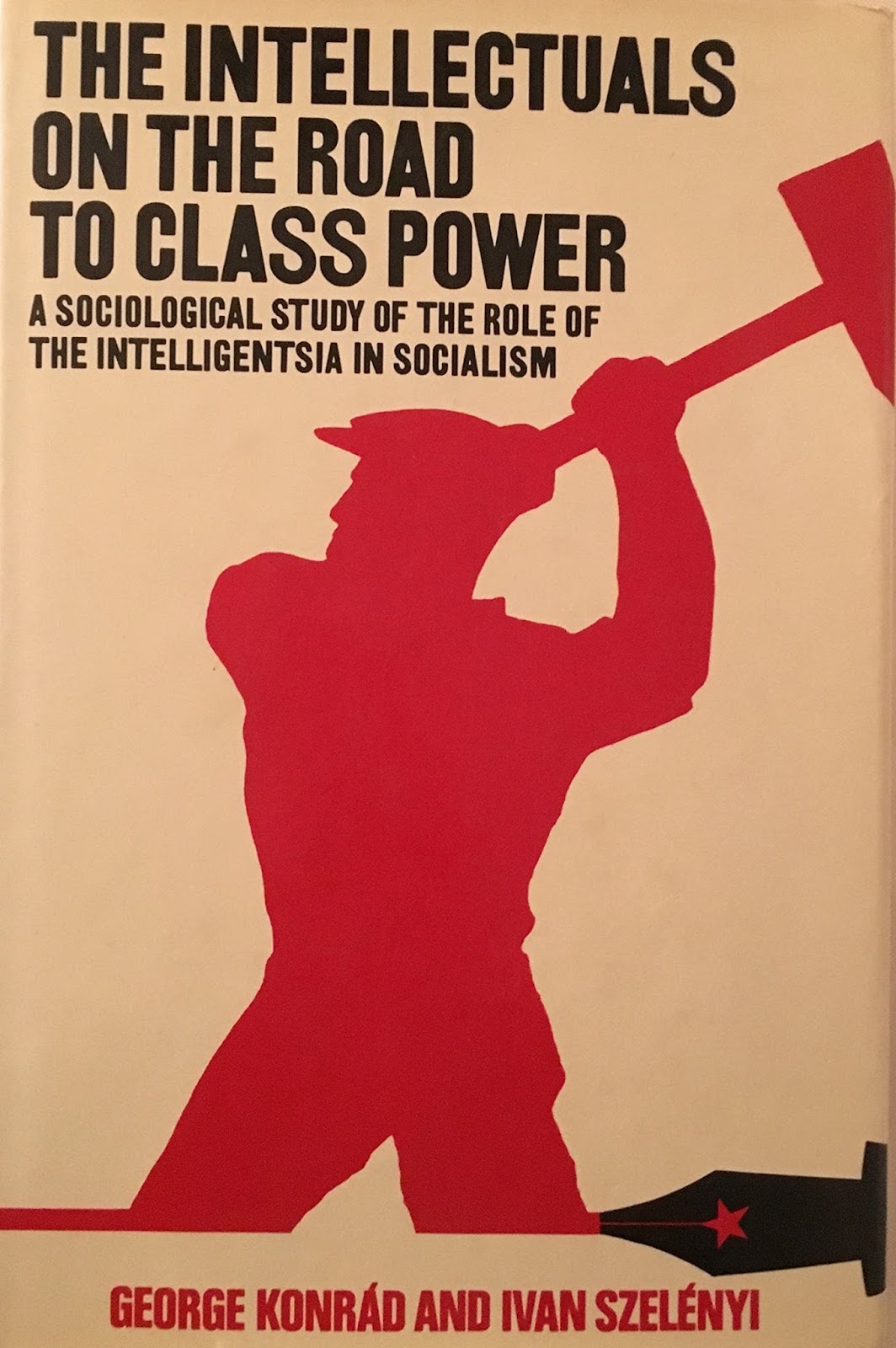
Szelényi is the author of many books and the recipient of as many prizes and distinctions. Among his most prominent publications is The Intellectuals on the Road to Class Power, which he co-authored with György Konrád (and which first appeared in 1979); Making Capitalism without Capitalists (With Gil Eyal and Eleanor Townsley), published by Verso in 1998 and translated into several languages; Privatizing the land: Rural Political Economy in Post-Communist Societies, also from 1998; Theories of the New Class – Intellectuals and Power (with Larry King) from 2004, and Poverty and Social Structure in Transitional Societies: The First Decade of Post-Communism (from 2013). 

Special thanks to Máté Rigó (Ph.D. Cornell, 2016) for preparing an inventory of the interview.

Interview Themes


00:00 Family background: bourgeois family from Késmark
02:00 Family politics: Horthy, Trianon as a source of political radicalism, Nyilas party
Szelényi's paternal great-great grandparents Karl József
Kamitska (1804-1864) and Anna Schwarz (1813-1900)
07:00 Political conviction of Szelényi’s father, radicalization
09:00 Trianon, exposure to nationalist discourses
11:00 1948: Six-month trip to the Netherlands as a ten-year old through the Calvinist church
12:00 Dutch trip and stay in a Dutch family’s home; trip formative for the formation of Szelényi’s political views
14:00 Dutch host family; Hungarian fixation on noble background vs. Dutch attitudes
17:00 Identification as a “transnational,” American, and Hungarian
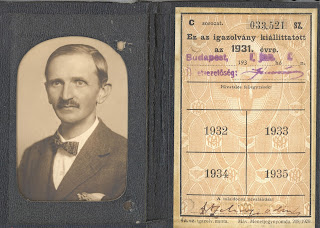
Szelényi’s grandfather, Ödön (Victor) Szelényi (1877-1931),
distinguished scholar of education, philosophy,
literature and theology
19:00 The siege of Budapest, experiences with the Red Army, Rózsadomb, Kapy utca in 1944
23:00 The siege, interaction with soldiers
24:00 Impact of literature teacher in formation of left and liberal, humanitarian ideas
26:00 Influential books, classmates, friends, Ferenc Litván, György Litván, József Litván, Károly Szendi
30:00 Diversity of friends’ backgrounds
31:00 1950s: left-liberal views solidified, non-communist, ”lefty”
34:30 Endorsement of Bernie Sanders
36:00 Humanism as political conviction; Political views did not change
Szelényi's father, Gusztáv
Szelényi (1904-1982)
40:00 Experience of reading many novels during adolescence, Thomas Mann, Dostoevsky, Ibsen, Hungarian poetry
47:00 The artist Lili Országh
50:00 Training as an urban sociologist, András Hegedűs
52:00 Ford fellowship at Columbia University and Berkeley, 1964-1965
54:00 George Konrád
56:00 Empirical research on newly built housing estates with Konrád
58:00 Overrepresentation of cadres in new socialist block apartments


00:00 Sociology
02:00 Choice of sociology as a career, University of Economics, János Avar, studies as an undergraduate
03:00 Refused to join Communist Youth League initially
04:00 Central Statistical Office
06:00 Choice of sociology as a profession
08:00 Research on leisure time
11:00 Ford Foundation interview
13:00 Research on housing with Konrád
14:00 1956 revolution, followed events without engagement
16:00 Politics without passions
19:00 2016 US elections
21:00 1956, Went on a date instead of participating in revolutionary march
24:00 Fear of the rise of anti-Semitism and the return of the Horthy regime
28:00 1956 revolution a mixed bag ideologically, thinks of emigrating to Vienna
31:00 Russian invasion of Hungary in 1956
34:00 The terrorist mindset, Islamist terrorists, suicide bombers
35:00 Emigration to Vienna
36:00 Intellectuals on the Road to Class Power, István Bibó as a colleague at Statistical Office
37:00 Foreign journals department at the Statistical Office
38:00 Idea for Intellectuals on the Road to Class Power comes from István Bibó
40:00 György Konrad, The City Builder; the privileges of intellectuals in the socialist regime
43:00 The transformation of villages under socialism; “under-urbanization,” one million commuters in 1970s Hungary
46:00 The transformation of gender relations in rural Hungary
48:00 Urban planners and under-investment in villages; Szelényi and Kondrád’s article “dictatorship of the club of planners,” Pál Granasztói
53:00 Evaluations of socialism by intellectuals in Hungary in 1960s, 1970s
54:00 István Bibó, “dictatorship of the intellectuals,” Milovan Djilas, changes after Stalin’s death; science as tool to give legitimacy to state bureaucrats
58:00 Ideology and intellectuals
1:01:00 Intellectuals vs. technicians, technocrats
1:05:00 US academia and technocracy
1:08:00 Thorstein Veblen, US, “dictatorship of engineers,” New York intellectuals, managers
From the left: Sociologists Teréz Kovács and Iván Szelényi,
political scientist Bálint Magyar, and agrarian social
scientist Pál Juhász (photo Fortepan).
1:13:00 Criticism of intellectuals in the US; capitalist economy bribes intellectuals to prevent subversion
1:15:00 Moralism and the humanities
1:18:00 Katherine Verdery
1:21:00 The reception of Intellectuals on the Road to Class Power in the US; the writing of the book
1:23:00 Withdrawal of research funds from Konrád and Szelényi
1:28:00 Punishment after Intellectuals on the Road to Class Power appeared

Interview with Adrian Grama--December 28, 2016

Interview with Adrian Grama, advanced Ph.D. student in History at the Central European University in Budapest. Interview conducted in Vienna, Austria on December 28, 2016. To listen to an audio stream of the interview, click here. 


Grama has recently completed his dissertation titled  “Labouring Along: Industrial Workers and the Making of Postwar Romania, 1944-1958.” He is also associate editor for the European Review of History.

Interview Themes

00:00 Introduction
00:47 How Grama defines his field: the social history of the Romanian economy
02:41 Evolution of Grama’s dissertation topic
05:07 On making the switch from Political Science to History
08:53 On cutting the “labor question” out of the title
11:01 Most revelatory moments during the writing of the dissertation (on the importance of the Second World War and the postwar economic transition, austerity as an experience Romania shared with many other countries)
16:08 On how a history cannot be limited to one country
17:00 Implications of comparing Romania to France and/or Germany
18:58 Why the idea of a “post-war” as a clear historical conjuncture is absent from the historiography East-Central Europe (importance of engaging in periodization)
21:31 What happens to ideology when one compares East and West?
23:56 To what extent did the conditions of the global market allow for genuinely different policy options after the Second World War?
27:10 Ethnographic/social anthropological approach versus classical social history
32:03 On the applications of the word “populism”
35:15 Grama’s working-class family history and how it influenced his perspective
38:35 Family interpretations of the socialist experience that Grama grew up with
45:04 Grama on the efforts of young Romanian intellectuals to write a history relevant for the present
47:45 On the aspects of the past that seem most relevant for understanding the present (“history is not a morality tale”)
53:37 On the intellectual environment at CEU
55:44 Romanian politics and how it is different from that of Hungary and Poland (explaining the absence of a far right in Romania)
1:04:05 On Romanian intellectuals’ disdain for the common people
1:05:49 Is there a political valence to nationalism studies?
1:09:18 On whether we can move on from the study of nationalism or not
1:11:00 Memorable political moments/events in Grama’s own life
1:15:05 Manifestations of hope and disappointment Grama has witnessed
1:18:03 Books and scholars that have had a strong influence on Grama (Stephen Kotkin’s Magnetic Mountain)
1:23:20 On training people to write history
1:26:50 What Grama is reading now and his next project

In Memoriam--Andrew Romay (1922-2017)

A tribute to Andrew Romay (1922-2017)


On Friday, February 10, 2017, Mr. Andrew Romay, who was my dear friend, died in New York. His colorful and valuable life deserves, in my opinion, a special obituary. Few people in the world knew both Nazi concentration camps and Communist prisons, and few are those who, once they arrived in the United States, became both close friends and colleagues of the world famous brothers, Paul and George Soros. A highly successful financier, Andrew Romay was also an important philanthropist who, among other things, helped many immigrants to adjust to life in the United States.

Andrew Romay was born in Miskolc, Hungary, on September 24, 1922, to a Jewish family.  He never renounced his faith despite pressure in Hungary on assimilated Jews to convert to Christianity.  Characteristically for the inconsistencies of Hungarian and, in general, East European life in the interwar period, Andrew attended and graduated in a Catholic high School and, despite growing public antisemitism and anti-Jewish laws, he was allowed to study economics at Budapest University. Yet, before completing his doctoral work, he was drafted into labor service which, under the fascist Arrow Cross regime, late in 1944, found him digging anti-tank trenches on the Austro-Hungarian border. Barely alive, he was liberated, in the Mauthausen concentration camp, Austria, in May 1945, by US Army troops. 

Following the revolution of 1956, he and his fiancée Marietta Puder fled to Austria where the two were married and soon after emigrated to the United States. Although penniless, the couple immediately found work; he as an economist, and she as a fashion designer. Andrew soon met the engineer Paul Soros, George Soros’s elder brother, with whom he formed a Coal Transportation business in the South. This and later business ventures enabled Paul Soros and Andrew to make their fortunes.


In the last decade or two of his life, Andrew, who had lost his wife, devoted himself more and more to charity work. He did this in part by financing the creation of memorials for the thousands of Jews and Roma forced laborers who were killed or died of typhus and starvation at the Austro-Hungarian border in 1944-1945. He also helped to finance Holocaust studies in Hungary. His latest and greatest philanthropic achievement was the creation of a center for recent refugees, immigrants, and asylum-seekers at the English-Speaking Union in New York City. This so far has helped some 750 newcomers to the US with year-long scholarships, English classes, workshops, civic programs, and cultural events. 


Returning to Hungary, he completed his doctoral studies and subsequently worked at a state-owned import-export company where he met his future wife. Unable to stomach the abuses and gross inadequacies of Hungary’s Stalinist system, he tried to illegally cross the infamous Iron Curtain but was caught and imprisoned in a concentration camp at Kistarcsa. Freed six months later, he was hired by the Ministry of Foreign Trade which, even though he was one of the handful who spoke English as well as other languages and had a doctoral degree, gave him only entry level work.

Andrew Romay was one of thousands of highly talented Hungarians who were driven from their own state and society and yet, who nevertheless never abandoned their home country.

Interview with Isabel Hull--August 5, 2016

Interview with Isabel Hull, John Stambaugh Professor of History at Cornell University. The interview was conducted in Ithaca, NY, on August 5, 2016. To access an mp3 of the complete interview, click here.

Hull is the author of four books which received numerous prizes between them, most notably Sexuality, State and Civil Society in Germany, 1700-1815 (Cornell University Press, 1996.), Absolute Destruction: Military Culture and the Practices of War in Imperial Germany (Cornell, 2004), and most recently A Scrap of Paper: Breaking and Making International Law in the First World War (Cornell, 2014). In addition to being a Member of the American Academy of Arts and Sciences, she has also been a John Simon Guggenheim Fellow and an Alexander von Humboldt-Stiftung Research Fellow, and recently she won the very prestigious Max-Weber-Stiftung/Historisches Kolleg Research Prize.


Special thanks to Máté Rigó, Ph.D. (Cornell, 2016), for his help with the interview. 

Interview Themes

00:00 Introduction
01:00 Interest in Germany and German history, high school, early interest in Nazism
03:45 Choosing history as a profession
05:40 The Guns of August, early interest in WWI
08:00 Peculiarities of German history, themes that characterize Hull’s career
09:30 repetition in German history
11:45 Structures and their cultural aspects, habits, action, mind
12:15 A Scrap of Paper
13:00 1870 as a crucial in German history
14:20 1848
15:00 Sonderweg and its criticism
18:30 Max Weber
19:20 Germany’s special political path, WWI, WWII; Germany’s problems as political problems
21:00 Politics as key for understanding history
21:20 Trump
22:40 The role of chance in history
25:00 Kultur vs. politics in German political thought and practice
29:00 Critical interpretations of 19th- and 20th-century German history; Sexuality, State, and Civil Society in Germany
31:00 Interest in early modern history, baroque culture; David Sabean
32:00 Hannah Arendt
33:00 Intellectual influences: Gerhard L. Weinberg, Hans W. Gatzke, Peter Gay, Henry Turner, George Mosse, Joseph Redlich
36:00 Reaction to Christopher Clark’s Sleepwalkers
38:00 Diplomacy and the disappearance of Poland; Belgium
43:00 Interpretations of WWI; A Scrap of Paper
46:00 Current historiography and its problems; relativism; new interpretations of old stories as inadequate
50:00 Hull’s new project on WWI
54:00 Moral judgement and history
58:00 Social historical approach
1:02:00 WWI, diplomacy and its critics; Lenin
1:04:00 Belgium and WWI counterfactuals
1:09:00 International law and the protection of small states
1:10:00 States and international law
1:15:00 Council of Historians as advisory board to political elites; Graham Allison and Niall Ferguson’s article in The Atlantic
1:17:00 1839 Belgian treaties and origins of WWI
1:21:00 Emotions of Germans in early 1900s; the revolutionizing of Europe by Germany
1:29:00 István Bibó; Thomas Mann
1:31:00 Vergangenheitsbewältigung
1:35:00 Experience of the Bundesrepublik in the 1970s; RAF; The Green movement, the women’s movement
1:40:00 Current world politics; Russia; tu quoque argument
1:42:00 Russian historical development v US
1:46:00 Vladimir Putin, KGB
1:48:00 Angela Merkel

For a short piece on Hull and the use of "tu quoque," see Wide Awake with Isabel Hull. 

Interview with Jim Bjork--June 13, 2016

Interview with Jim Bjork, Senior Lecturer in Modern European History and Liberal Arts at King's College London. The interview was conducted in London on June 13, 2016. To access an mp3 of the complete interview, click here.

Jim Bjork specializes in the history of nationalism and the social history of religion. His book, Neither German nor Pole: Catholicism and National Indifference in a Central European Borderland, 1890-1922 (University of Michigan, 2008), shows the myriad ways religion competed with nationalism for the "souls" of Upper Silesians around the turn of the century. He’s currently at work on a history of religion in postwar Poland. 

Interview Themes

How Bjork came to the study of East-Central Europe; coming of age around 1989 (min. 1:25)
What drew him initially to “Cold War” takes on the communist bloc (4:15)
Bjork’s memories of 1989 as a student at Georgetown - "disorienting but exhilarating" (5:55)
On his first visit to the region in 1993 and what stood out; the unique atmosphere in Romania (9:20)
Learning German, Polish, etc. (14:50)
Bjork's plans when he started grad school at the University of Chicago (16:15)
On Bjork’s starting cohort at Chicago (17:55)
Is there anything that sets his cohort/generation apart intellectually? John Boyer's influential interest in religion and politics; Alf Lüdtke and Alltagsgeschichte (19:35)
Comparing Chicago to Columbia in treatment of the Habsburg Monarchy (24:12)
How he came to his dissertation/book topic (28:20)
On religion as an “independent variable” (31:07)
How his interests were influenced (or not) by secessionism of the moment—Yugoslavia, USSR, Czechoslovakia? (34:25)
Bjork’s view on plebiscites in the post-WWI period, up to Brexit (38:00)
Sovereignty and the problem Westphalia was meant to address (44:00)
Were the partitions of Poland in some sense the original geopolitical sin? (46:57)
How he came to his current book project on religion in postwar Poland (52:30)
On Polish historiographical dichotomies (peasants/szlachta, nativists/Westernizers, Piłsudski/Dmowski, church/nation) and ways of looking at Polish history (58:17)
On Vergangenheitsbewältigung and Jan Gross's Neighbors (1:05:55)
The recent changes in Poland (with the coming to power of PiS) and how (un)expected it was (1:17:46)
On whether there is a desire on the part of East-Central Europeans to stop time (1:23:10)
Where the field is going/should go from here (1:29:05)
What's different about studying East-Central Europe from Britain as opposed to the US (1:40:42)

A Country for Old Men

October 2014 protest in Budapest against the Orbán government.
Photograph: Ronan Shenhav
This was recently published in the Boston Review. 

Last September an article on the front page of a leading Hungarian daily began, "The story of the ever-deepening refugee crisis is taking ever more unexpected turns." A prominent Hungarian intellectual and former dissident, György Konrád, had come out in support of the efforts of the Hungarian government to build a wall to keep out newcomers and to cast them as economic opportunists rather than political refugees. In another corner of the Hungarian media, pundits were citing passages from The Final Tavern (A végső kocsma), a 2014 book by Holocaust survivor and 2002 Nobel laureate Imre Kertész, who passed away last month. In the book, Kertész was sharply critical of liberals' welcoming attitude toward Muslim refugees and migrants. His and Konrád's statements were registered with incredulity in the liberal press and with undisguised relish on the right.

Anyone who has followed the serpentine trajectory of Hungarian politics since the controlled collapse of state socialism in 1989 might be forgiven for throwing their hands up in confusion. For more than two and a half decades, Hungarian political life has been a story of reversals. The party of the Young Democrats (Fidesz), founded in 1988 by a few-dozen college students, has mutated from a member of the Liberal International to the torchbearer of right-wing populism in Eastern Europe. Hungarians who once described themselves as liberal, including the current prime minister and Fidesz leader Viktor Orbán, have shed the epithet. Already in 1994, Orbán favored replacing it with "free-thinking." Twenty years later, his metamorphosis was complete when he wondered whether being part of the European Union was an obstacle to the reorganization of the state into "an illiberal nation state within the EU."

Orbán's liberal critics are quick to insist that he was never one of them. Plucky anti-communist dissidents who trumpeted individual liberties against the paternalistic and overweening socialist party-state merely looked liberal to many Western liberals. But conservatives, too, found soul mates in dissidents, generalizing their anti-communism into a wholesale censure of the left. In short, everybody loved a dissident. It was the left-leaning poet W. H. Auden who helped to bring dissident poet and later Nobel Prize–winner Joseph Brodsky to the United States in 1972; another poet and powerful intellectual force of the U.S. neoconservative movement, Peter Viereck, brought him to Mount Holyoke College in 1974. For every dissident who fulfilled the Western liberal fantasy, there were as many who fulfilled at least part of the conservative one, from union leader and Solidarity figurehead Lech Wałęsa to the Czech playwright, philosopher, and president Václav Havel.
If it was not the dissidents themselves who changed, what explains these reversals? And why has the migrant and refugee crisis in particular become so symptomatic of a crisis of liberalism?

...[to continue reading, click here]